Une Mort Très Douce Simone de Beauvoir
We source books!
Une Mort Très Douce (1964) By Beauvoir
A 1972 Lightweight Paperback. (H18cm x W11cm x D1cm). Condition: Like New.
Opening page reads, “Do not go gentle into that good night. Old Age should burn and rave at close of day; Rage, rage against the dying of the night… Dylan Thomas”
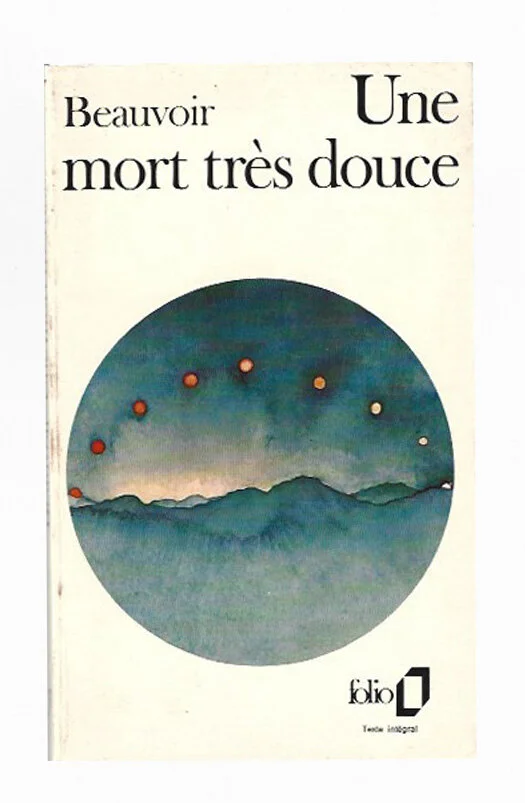
Beauvoir’s narrative in A Very Easy Death reflects that love of life and grief do not respect age. As Simone grapples with her Mother’s fast paced deteriorating body in this beautifully written, heartfelt and medically accurate account of the death of a loved one. Written from her Mother’s point of view of the final six weeks of her life, Beauvoir is able to articulate a profound perspective and captures the storyline in a hypnotic fashion. Arguably as one of the greatest writers of the 20th Century, Beauvoir in A Very Easy Death reveals how to master the form of perspective in the written word. A heartfelt book you are likely to never forget.
I recommend investigating Simone De Beauvoir’s disciplined and advantageous life. Beauvoir was ahead of her time in writing The Second Sex (1949). A book which discusses the mistreatment of women throughout history and the psychology and philosophy behind this defilement. Interestingly Beauvoir compares the defilement of women to race and how a myth is represented and concocted in the belief that lower echelons are inferior to the higher echelons within a hierarchal system.
Here is a rare interview of Beauvoir by The New York Times: https://www.nytimes.com/1974/06/02/archives/a-talk-with-simone-de-beauvoirr-marriage-is-an-alienating.html
Here is her obituary giving a summary of her life’s work in the written word: https://www.nytimes.com/1986/04/15/obituaries/simone-de-beauvoir-author-and-intellectual-dies-in-paris-at-78.html
Simone de Beauvoir La Force de L'age
La Force de L’age By Simone de Beauvoir
French, Excellent Condition with a Slight Tear On The Back Cover.
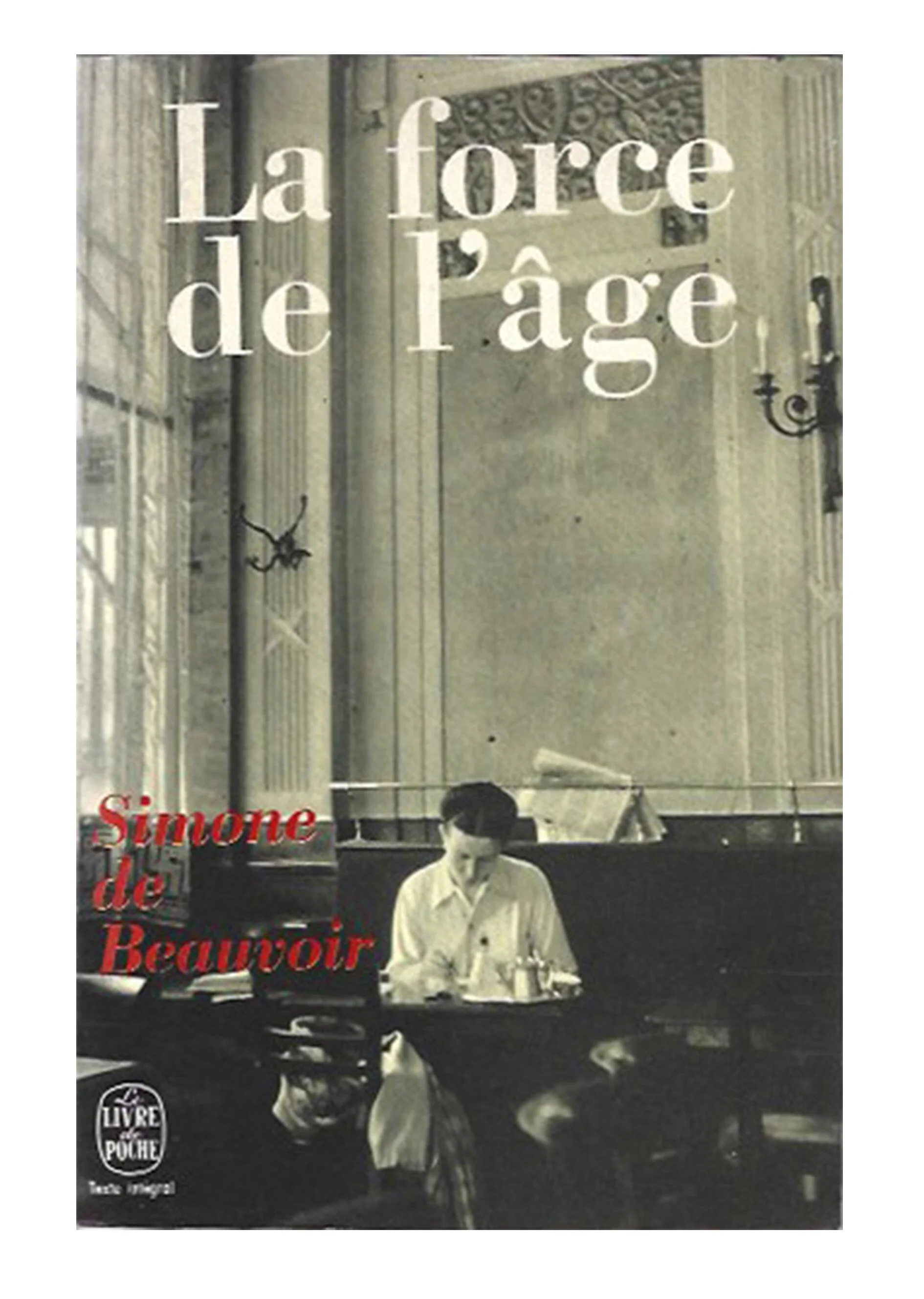
The Force of Age is an autobiographical work of De Beauvoir’s life leading up to and during the occupation in Paris. De Beauvoir's style changes into diary form during this time creating a familial portrait of her life and the cultural figures she was surrounded by such as Giacometti and Charles Dullin. The first part of the book is set before she meets Jean-Paul Sartre and covers a decade of life before the war. This enchanting time moulded De Beauvoir into the writer she became with her first experience of living independently.
La Force de L’age is De Beauvoir’s second autobiography preceding Mémoires d’une jeune fille row (1958) and followed by La Force des choses (1963) and All in all (1972).
Here is a rare interview of Beauvoir by The New York Times: https://www.nytimes.com/1974/06/02/archives/a-talk-with-simone-de-beauvoirr-marriage-is-an-alienating.html
Here is her obituary giving a summary of her life’s work in the written word: https://www.nytimes.com/1986/04/15/obituaries/simone-de-beauvoir-author-and-intellectual-dies-in-paris-at-78.htm
Luis Sepúlveda - Le Vieux Qui Lisait Des Romans D’Amour
Le Vieux Qui Lisait Des Romans D’Amour By Luis Sepúlveda
1992 Paperback
Very Good.

Sepúlveda lived a radical and tortorous life in Brazil fleeing Pinochet's dictatorship in the 70's which inspired him to write this magical allegory, ‘The Old Man Who Read Love Stories’ which follows Antonio who feels out of place within his society. He decides to take refuge in the Amazon and leaves San Luis with his wife. While escaping modernism and all it has to offer Antonio uncovers a blissful relationship between himself and nature. However the jungle is hard on Antonio, men look for gold and predators hang in the overgrowth above. Luis will provoke your curiosity for the natural world we live in.
"To my distant friend Miguel Tzenke, Syndic Shaur of Shumbi in upper Nangaritza and great defender of the Amazon. It was he who, one night, through his stories overflowing with magic, revealed to me certain details of his unknown green world that I used later, in other parts of the equatorial world, to construct this story. LS"
For further reading on the serious life of Luis Sepúlveda follow the link below,
https://www.nytimes.com/2020/04/20/obituaries/luis-sepulveda-dead-coronavirus.html
Milan Kundera L’immortalité
L’immortalité (1988/1990) by Milan Kundera
Hardcover.
Book Condition: Like New. Jacket Condition: Very Good.
412pp. Dimensions:12cm x 14.5cm x 3cm

‘It will make you cleverer, maybe even a better lover. Not many novels can do that.’ Nicholas Lezard
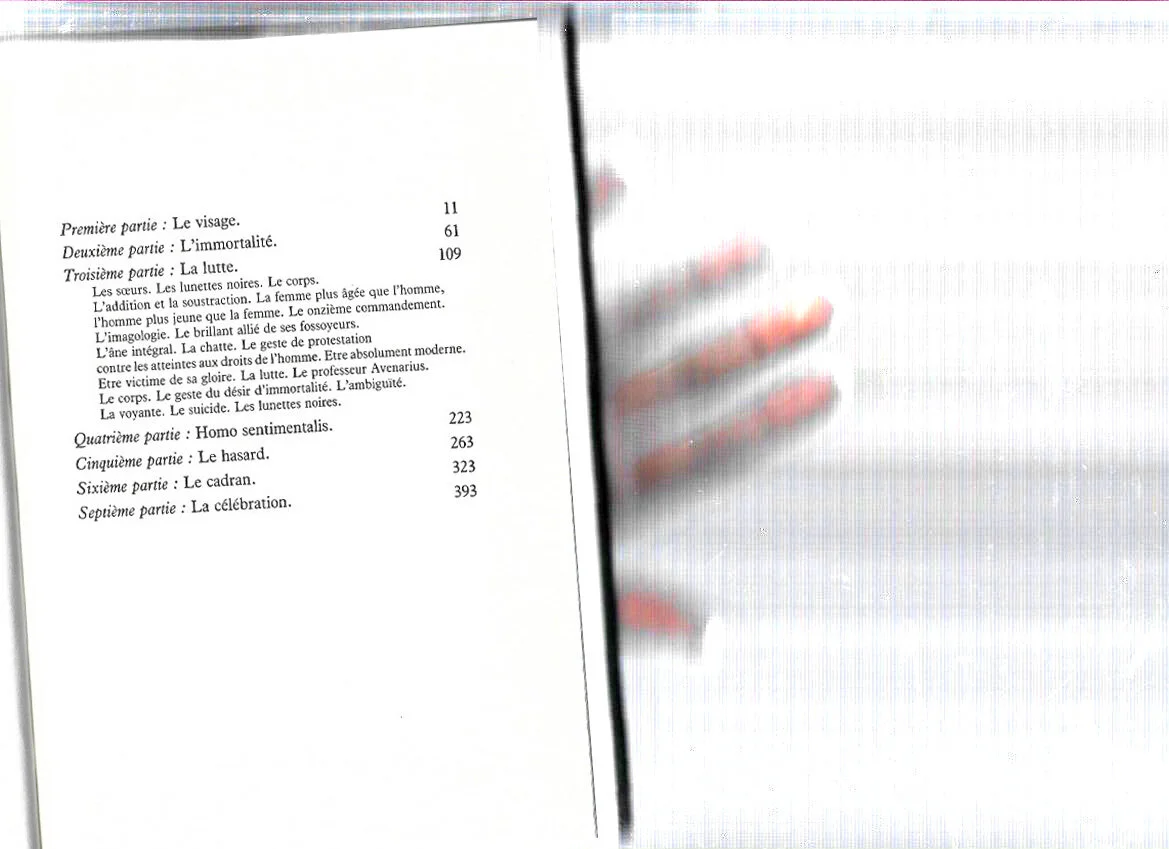
Kundera’s humour is absolute and attention to detail profound. Both the characters and scenery make up this book to be a wonderful way to understand what it is to be alive. Immortality focuses on the story of Agnes, her husband Paul and sister Laura. Agnes’ character is created out of a sixty year old woman, who catches Kundera’s eye at a swimming pool. The odd pairing of her wrinkled, aged body and young bright facial expression bemuses him. He comments, ‘“There is a certain part of all of us that lives outside of time. Perhaps we become aware of our age only at exceptional moments and most of the time we are ageless.” Ernest Hemingway, Goethe and Ruben a lover from the past also make appearances throughout. In seven parts Kundera grapples with the fragility, purpose, meaning and examples of death in The Face, Immortality, Fighting, Homo sentimentalis, Chance, The dial and The celebration.
I recommend reading this short piece by The New York Times. For it is a superb example of Milan Kundera’s fascinating manipulation of sentences and play on factual events…: https://6thfloor.blogs.nytimes.com/2011/04/18/remembering-and-forgetting-milan-kundera/
Immortality is the concluding book of a trilogy which includes The Book of Laughing and Forgetting, and The unbearable Lightness of Being.
Jazz (1992) By Toni Morrison
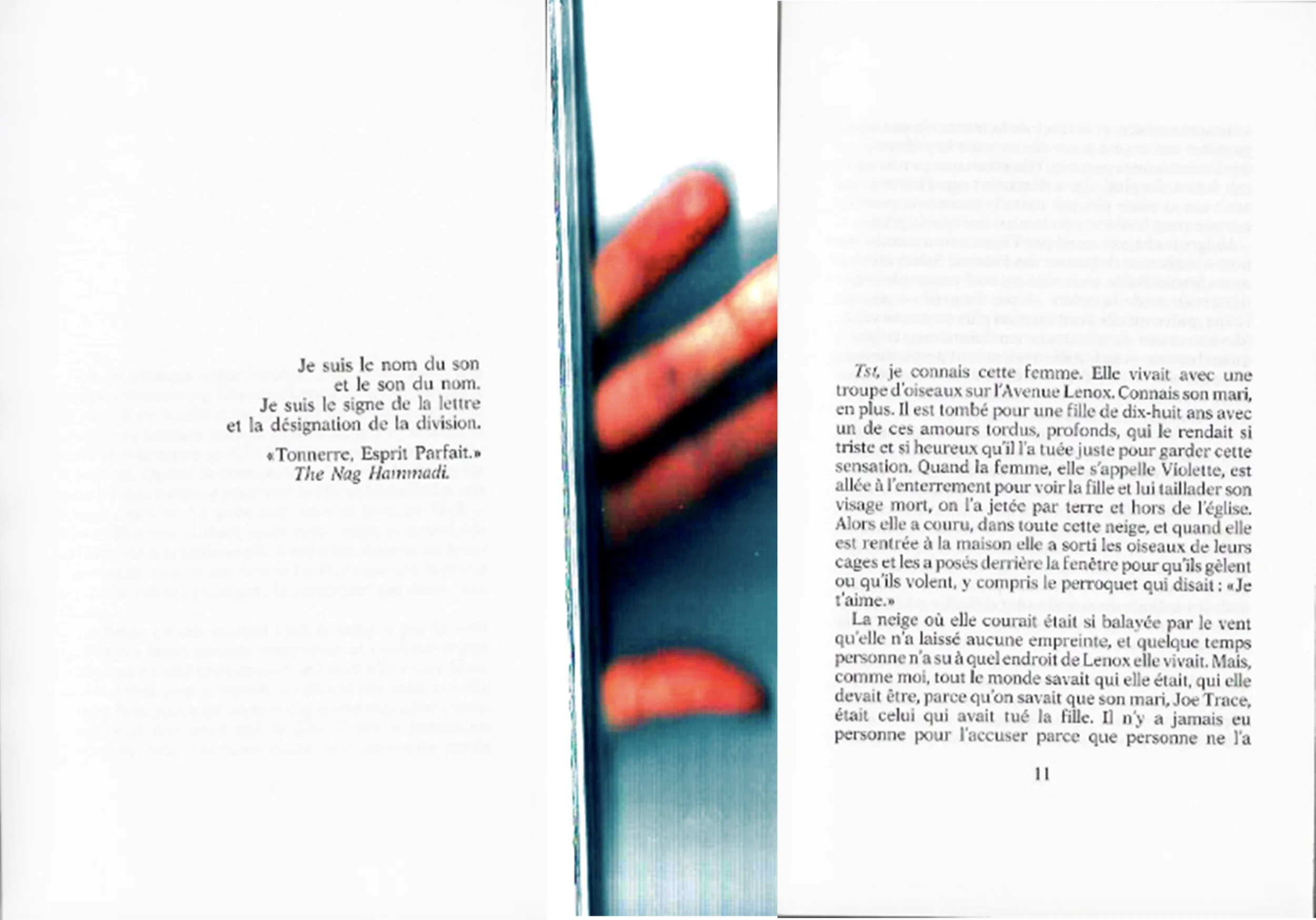
A Christian Bourgois, 1993 French paperback. Condition: Very good with slight wear on the front cover and spine. 249 pages of candid narrative and poetic style making this book the essential read.
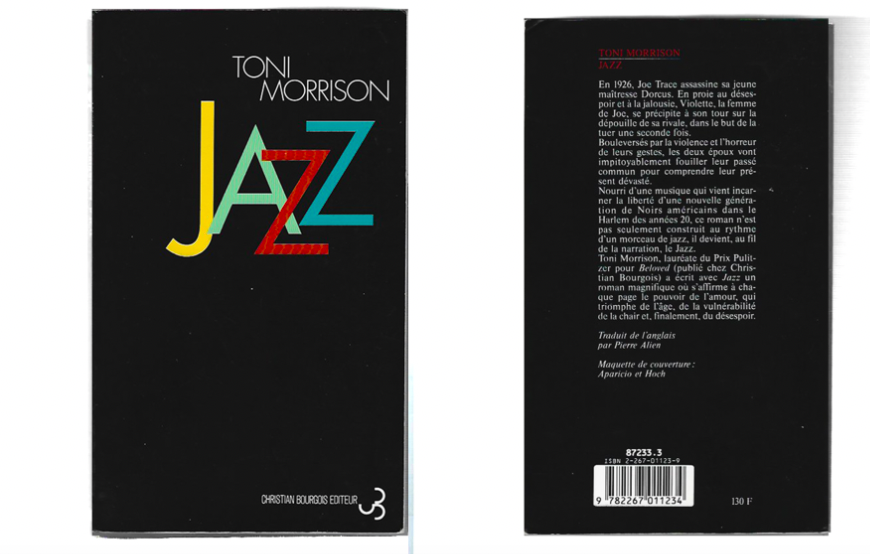
The jazz tainted novel is set in 1920s Harlem, New York and cuts through the brutal entanglement of the American racial undergrowth via the past and present of a young Black couple. The lyrical brood described in the book animates the reality of Harlem in the 1920’s. A place of violence, riots and discrimination lamented with bluesy jazz. The sounds, smells and euphoria of New York act as a symbol of renewal for the young Black couple who have migrated from the South. However Joe and Violet quickly learn that it is no picnic, ‘What it is is decisive, and if you pay attention to the street plans, all laid out, the City can’t hurt you’. Morrison uses call and response a style derived from jazz, which allows the characters to narrate the same scenes from their own perspectives. This dreamlike prose weaves the plot backwards and forwards through time in her typical style. The cadency of her voice was very much needed on the literacy scene in the 90s and thus remains. The capability of her work to produce conversations around the brutality in Black history and the nuances endured.
Jazz is the second book of Ms. Morrison’s Dantesque trilogy on African-American history, between Beloved (1987) and Paradise (1997).
I would also recommend listening to the audiobook of Jazz read by Ms. Morrison. For her pebbly voice is the soothing antidote we didn’t know we needed and Jazz interludes are played between chapters, giving that all encompassing visceral feeling that is New York.